Place de la Comédie in Montpellier under a blue sky
Towns, harbours & resorts

Destinations

Seven gateways. Open just two and you already understand the department.

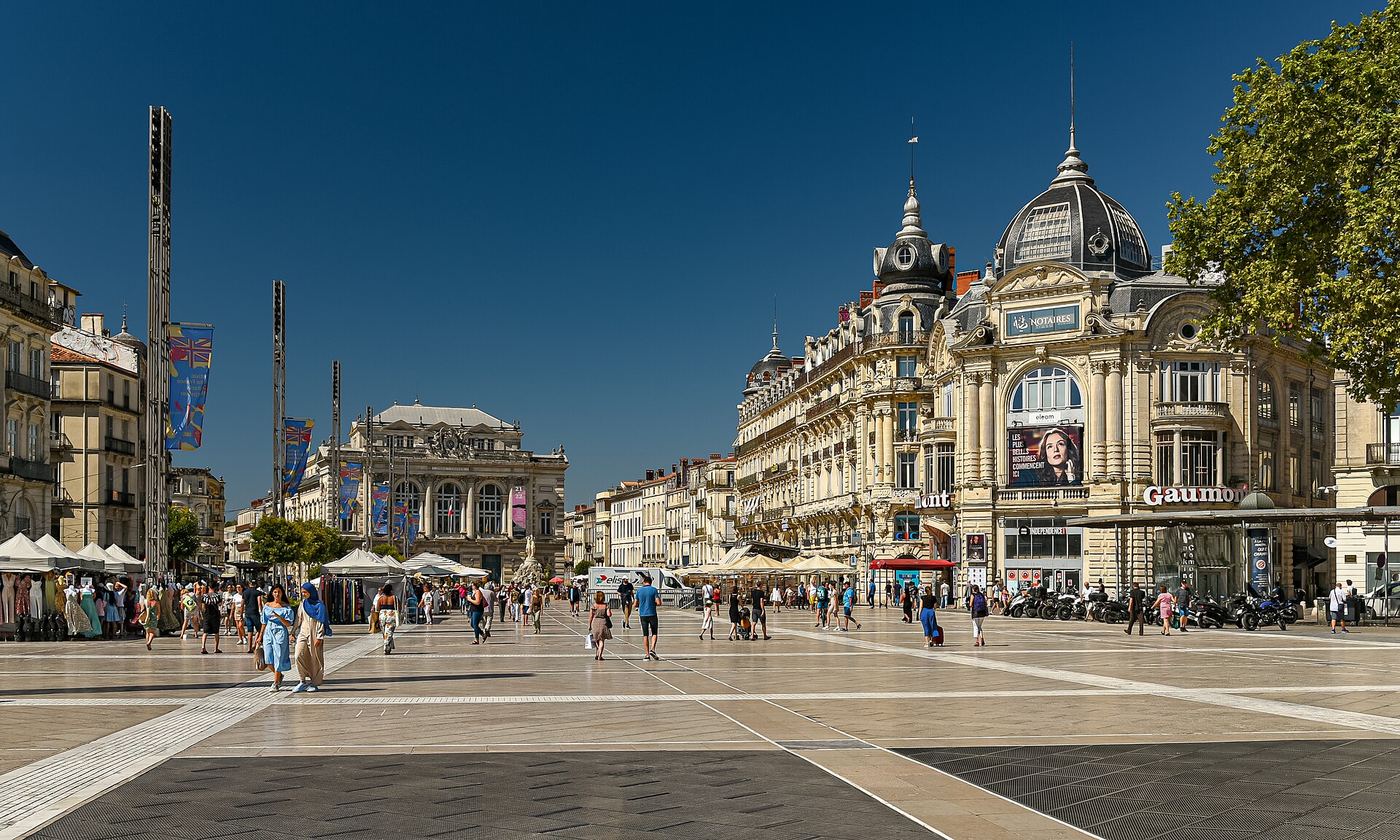
Place de la Comédie, opera house and Gaumont
Capital

Montpellier

Montpellier is not a seaside city: it is a city toward the sea. Start on Place de la Comédie — “the egg”, locals say — between the Opéra Comédie, the Gaumont and the terraces. Behind it, the Écusson: medieval lanes, one of Europe’s oldest medical schools, the shade of pale-stone façades.

Climb to the Peyrou for the triumphal arch, the water tower and the aqueduct. Drop down toward Antigone, Ricardo Bofill’s district, then take tram 3 or 4 if the beaches are the goal. Allow 35 to 45 minutes to Palavas or Carnon.

On the ground

  • Place de la Comédie and the Three Graces fountain
  • Musée Fabre — one of the South’s great museums (Courbet, Bazille, Soulages)
  • Peyrou promenade at sunset
  • Jardin des Plantes, France’s oldest botanical garden (1593)
  • Halles Castellane or Laissac for lunch
Time1 day (centre) · 2 with museums
AccessTGV, MPL airport, tram
ParkingComédie / Polygone car parks
Sea12 km · tram + bus or bike
Tip. Sunday morning, the Arceaux market under the aqueduct is worth the detour before Comédie fills up.
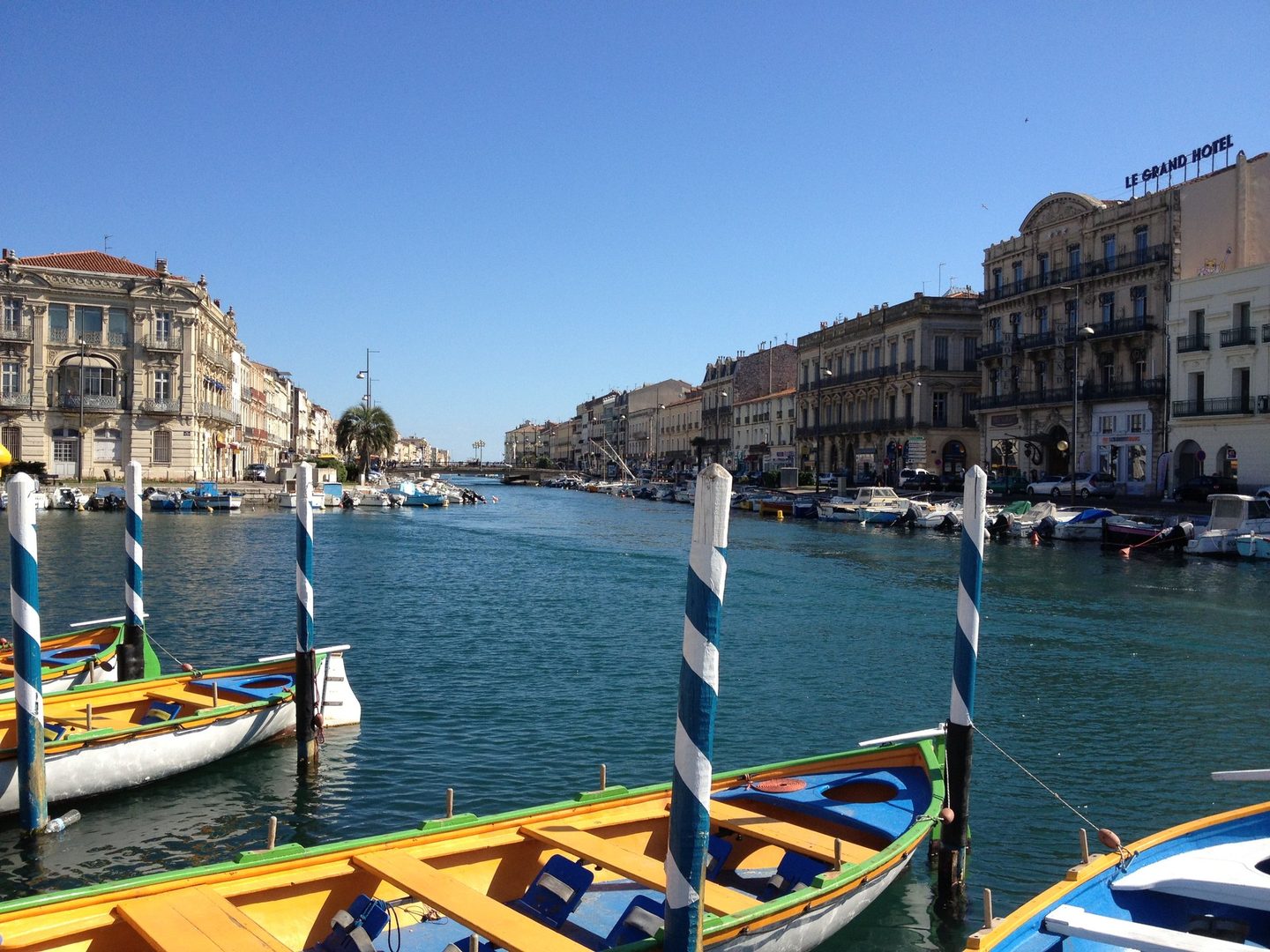
Sète, Canal de la Peyrade, boats and Grand Hôtel
Venice of Languedoc

Sète

Dedicated Sète page →

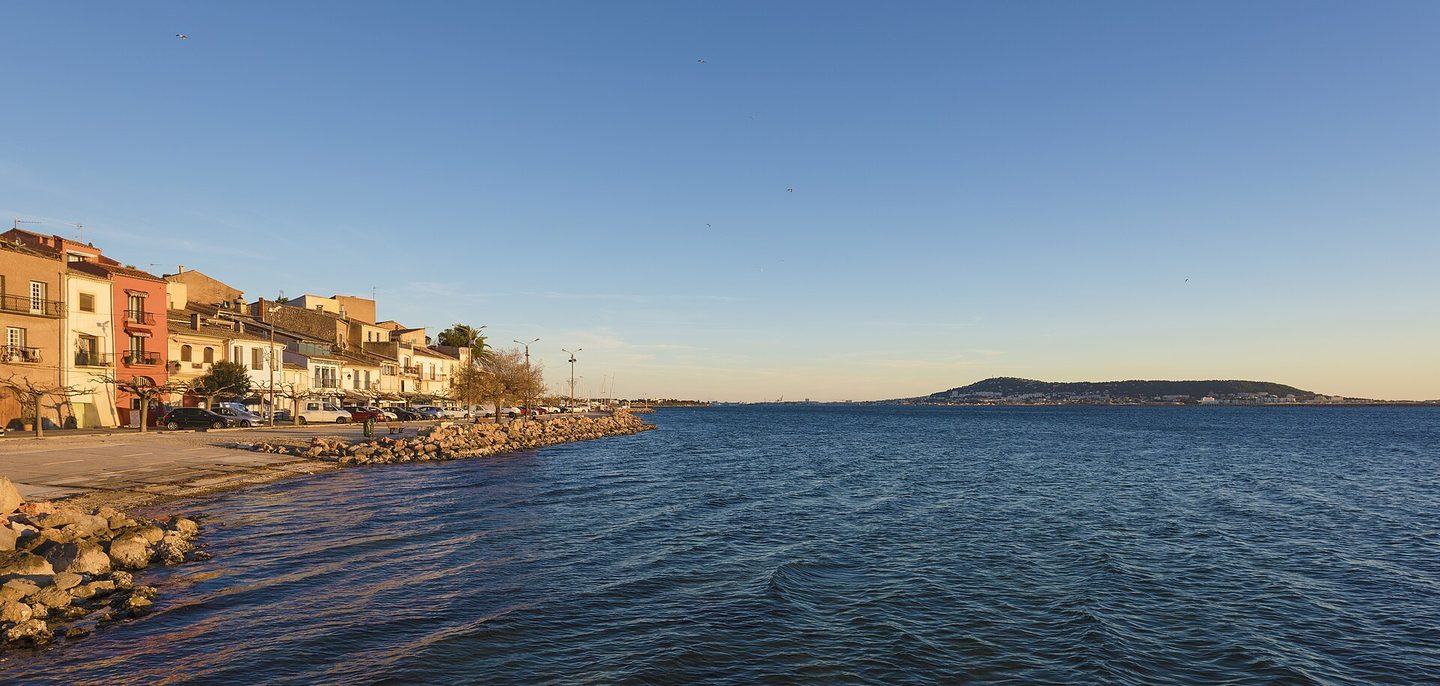
Sète is an island, linked to the mainland by sandbars. Mediterranean on one side, Thau lagoon on the other. Canals cut through the town; trawlers come home in the morning; Mont Saint-Clair (183 m) gives the whole layout in a twenty-minute climb.

Start at the covered market — tielles, cuttlefish, oysters, strong coffee. Follow the canal Royal, climb to the marine cemetery (Valéry, Brassens), drop to the Corniche for a swim. In summer, Languedoc water jousts fill the canal: not folklore for tourists — the town’s own sport.

On the ground

  • Halles de Sète from 8 a.m. — tielle still warm
  • Mont Saint-Clair and Notre-Dame-de-la-Salette chapel
  • Marine cemetery and Musée Paul Valéry
  • Théâtre de la Mer, facing the waves
  • Upper town, narrow streets, laundry at the windows
TimeA full day, better with a night
AccessTER from Montpellier · A9
ParkingTight in summer · arrive before 10 a.m.
EatTielle, macaronade, cuttlefish with rouille
Bouzigues and the Thau lagoon, view toward Mont Saint-Clair
Between sea and lagoon

Thau basin

Dedicated Thau page →

The Thau lagoon stretches about 19 km. It is not a lake: it is a salt lagoon, linked to the sea by the graus of Sète and Marseillan. Oysters grow here (Bouzigues) and mussels too. Rheumatic joints are treated at Balaruc-les-Bains, France’s busiest spa town by visitor numbers. Some mornings, flamingos appear.

The villages — Bouzigues, Loupian, Mèze, Marseillan, Balaruc — line the northern shore. Lunch almost with your feet in the water, a jug of Picpoul de Pinet, a dozen oysters. In Balaruc, the FLAMINGO ART studio turns the lagoon into paintings: the souvenir that will not melt in the cool box.

A one-day circuit

  • Morning: stroll and spa at Balaruc, or kayak
  • Midday: tasting in Bouzigues (a cabin, not a beach restaurant)
  • Afternoon: Marseillan and Noilly Prat, or Mèze and its harbour
  • End of day: FLAMINGO ART studio or sunset on the lagoon
Area≈ 7,500 hectares
SpecialtyBouzigues oyster, Picpoul
WellnessBalaruc spa
SouvenirFLAMINGO ART paintings

FLAMINGO ART shop

La Grande Conque, volcanic cove at Cap d'Agde
Volcanic resort

Agde & Cap d'Agde

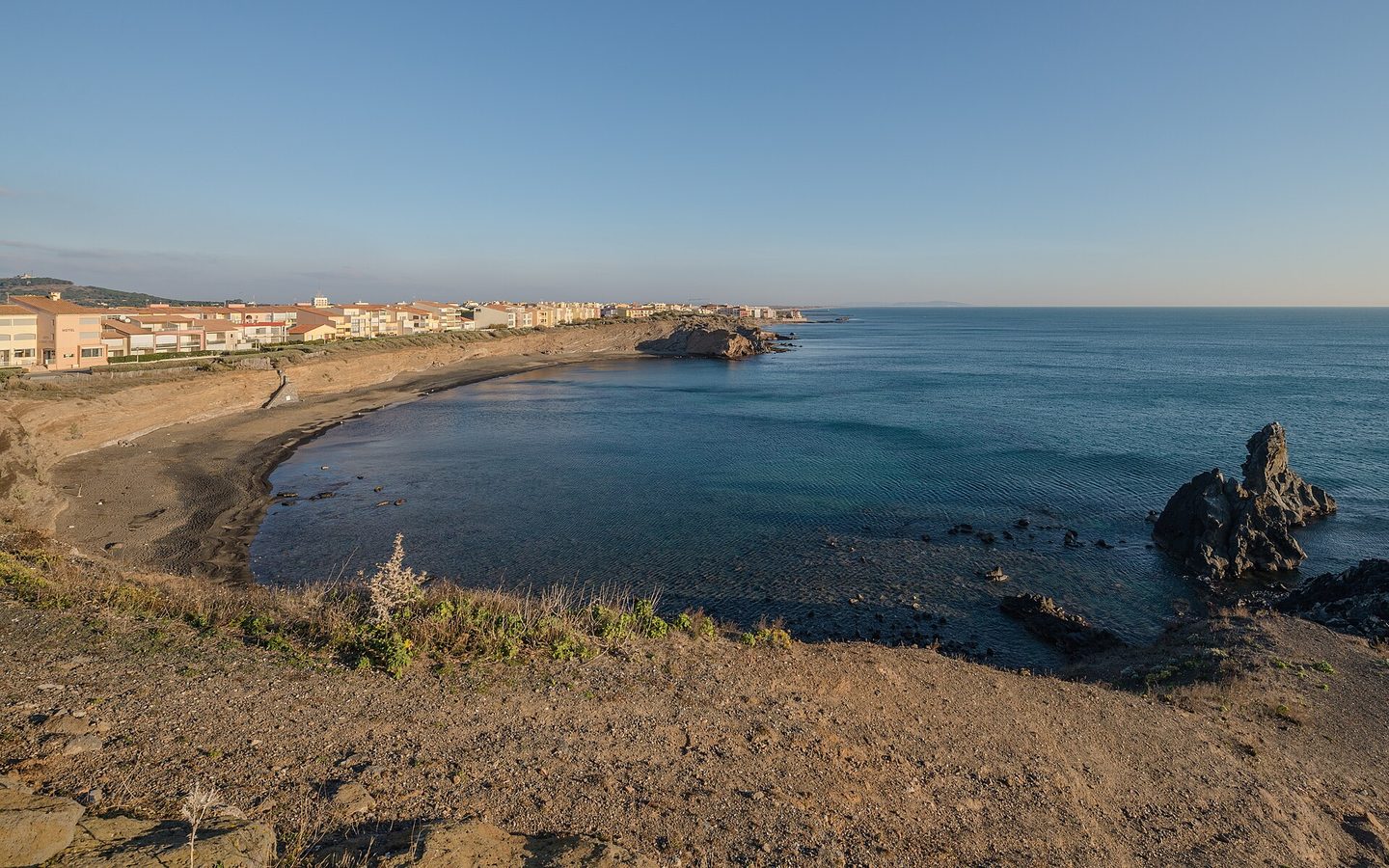
Agde is black. The stone comes from the old Mont Saint-Loup volcano. The old town — one of France’s earliest Greek settlements, Agatha — contrasts with the Cap, a 1970s resort of harbours, beaches and Aqualand.

La Grande Conque: dark sand, basalt rock, clear water. Further east, the Grau d'Agde where the Hérault river meets the sea. The Canal du Midi ends here.

  • Grande Conque and Musée de l'Éphèbe (Greek bronze raised from the Hérault)
  • Historic centre of Agde, basalt cathedral
  • Fort Brescou offshore
  • Centre, Richelieu and Grau d'Agde beaches
Family. The Cap is built for summer with children. For quiet, aim for June or the Grau early in the morning.
Boat in the Fonseranes locks
Biterrois

Béziers & Canal du Midi

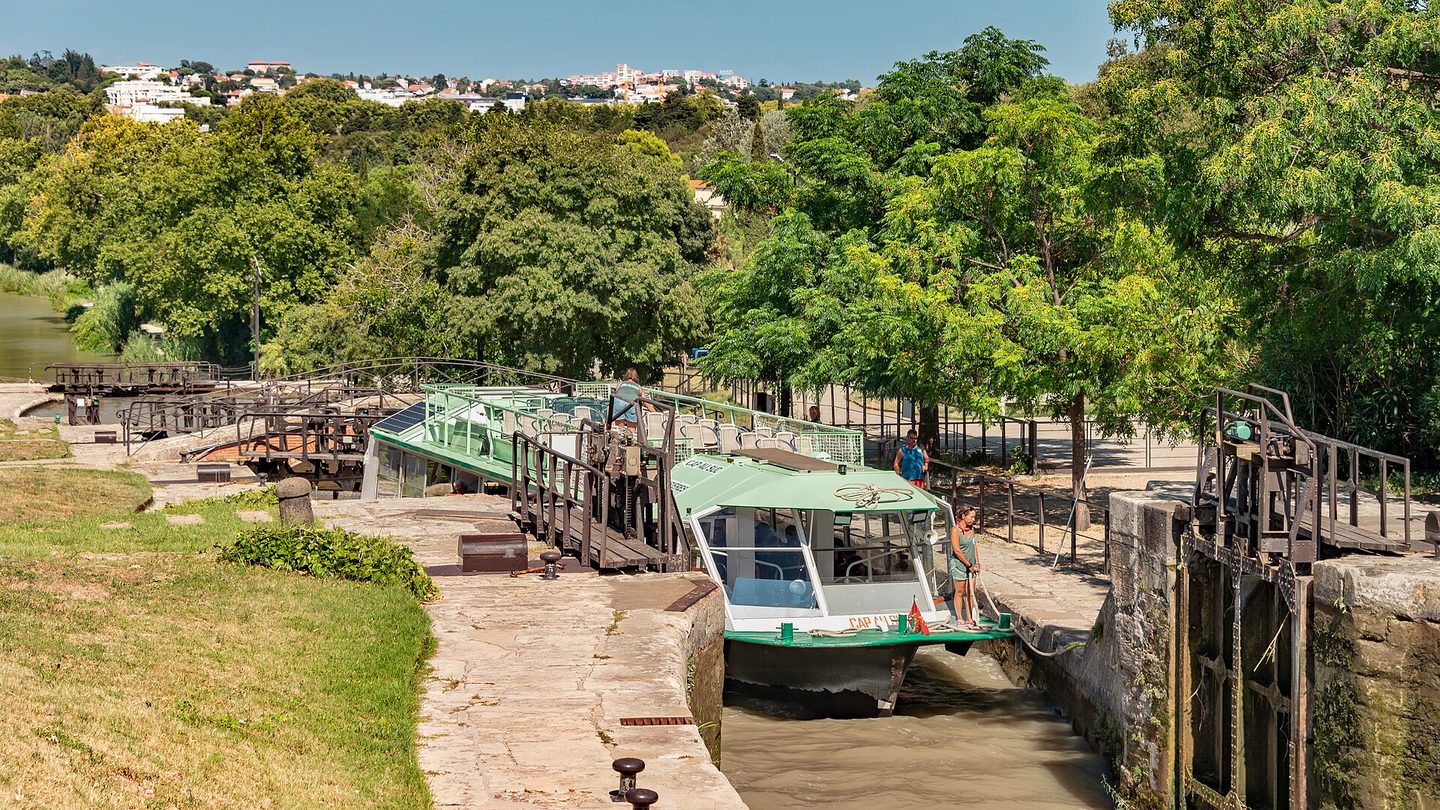
Béziers looks out over the plain from its hill. Saint-Nazaire cathedral dominates the Orb. Below, the nine Fonseranes locks — Unesco — drop the Canal du Midi like a water staircase. Pierre-Paul Riquet, a local son, built here the most spectacular stretch of his line.

Walk the Allées Paul Riquet, cross the Pont Vieux, push on to the canal bridge. In August the feria fills the town. Fifteen minutes away: the beaches of Valras and Sérignan.

  • Fonseranes locks, on foot along the pounds
  • Saint-Nazaire cathedral and the view
  • Orb canal bridge
  • Valras-Plage late afternoon
Shopping lane in Pézenas
Molière’s town

Pézenas

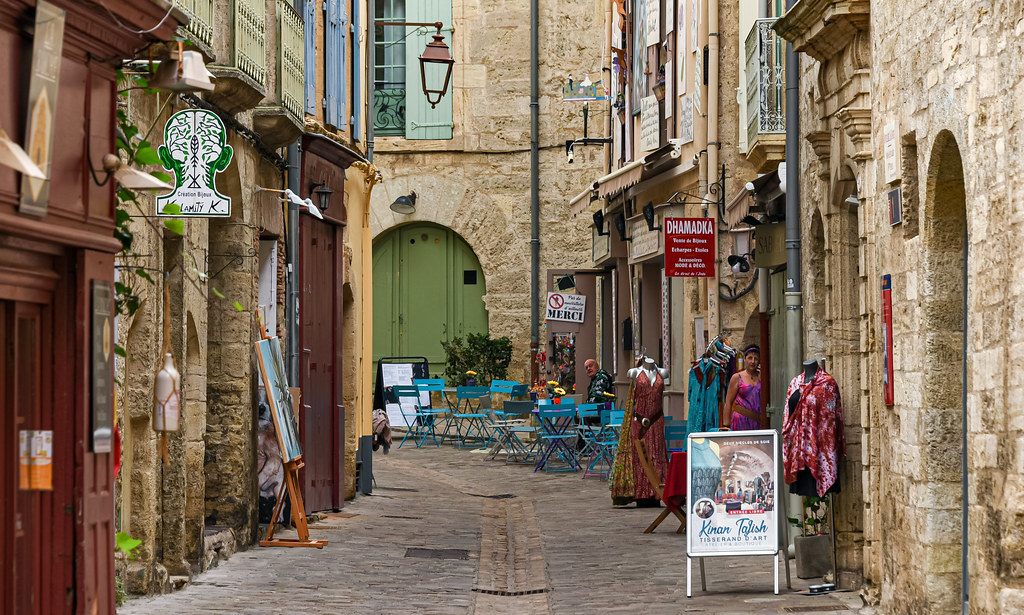
A seventeenth-century provincial capital, Pézenas kept its townhouses, courtyards and antique dealers. Molière played here. You do not tick a list: you stroll, step into a courtyard, eat a little pâté — a sweet-salty recipe said to have come back from the Indies with Clive.

From here, Faugères and the schist hills are a short hop; Béziers or the lagoon less than half an hour away.

  • Cours Jean Jaurès and collégiale Saint-Jean
  • Maison des Métiers d'Art
  • Petits pâtés de Pézenas, still warm
  • Wine road toward Faugères in the afternoon
Harbour and pyramid of La Grande-Motte
Architecture & pinewood

La Grande-Motte & Palavas

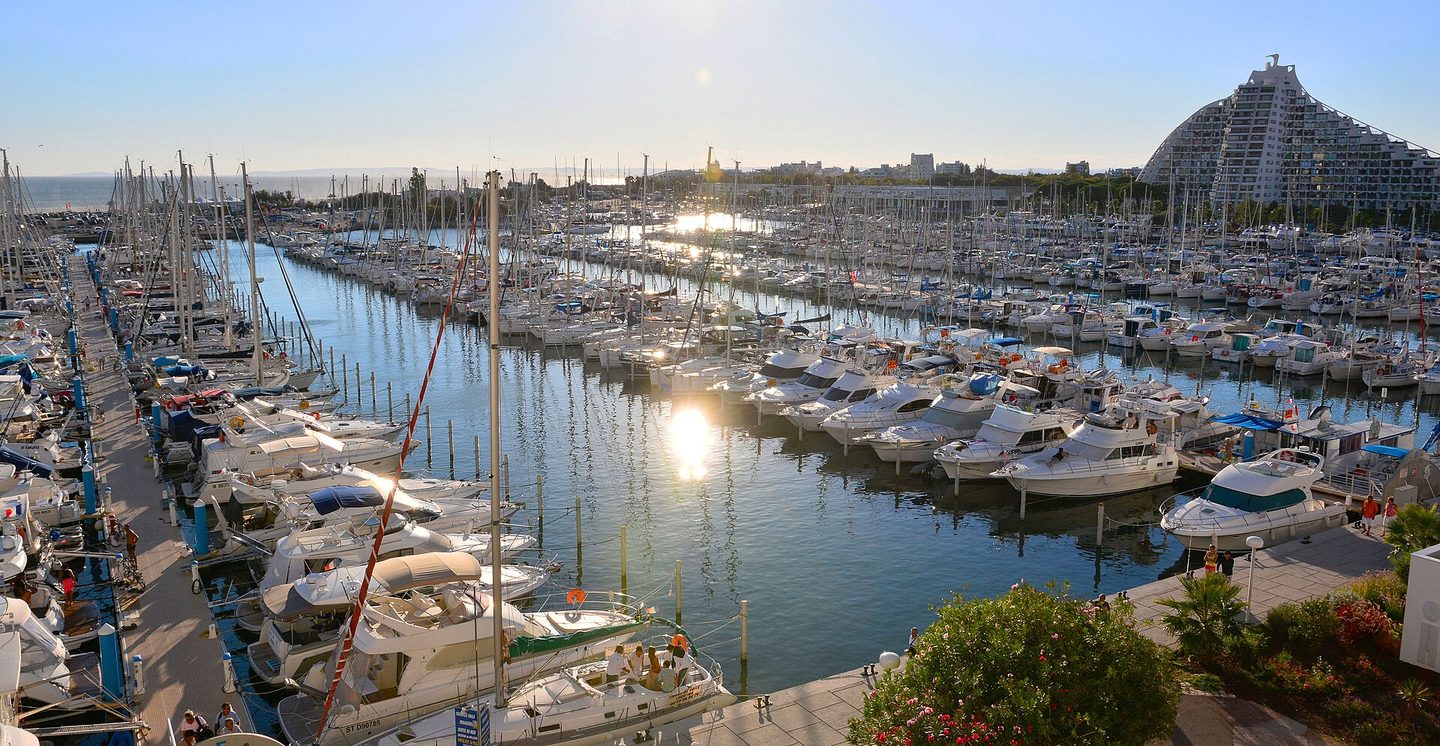
Jean Balladur designed La Grande-Motte in the 1960s: white pyramids, harbour, pines. What was controversial became an icon. You walk it for the architecture as much as for the beach.

Westward, Palavas stretches its jetty and lighthouse. Carnon holds the back lagoons. Maguelone, a cathedral-island, is reached on foot or by bike, away from the blocks.

  • Architectural stroll in La Grande-Motte
  • Palavas jetty and lighthouse
  • Maguelone cathedral, there and back on foot
  • Lido cycle path, Carnon–Palavas